What is spiritual care, and does it matter anyway?
by Peter Kevern
For Christians and people of faith, it may seem obvious that a hospital should be a place of spiritual as well as physical healing. Hospitals originated as places where Christians (and particularly the religious orders) would care for the sick, as part of their discipleship; and the Free Hospitals that flourished in the nineteenth century were mostly founded by groups of philanthropists motivated by Christian faith. Until relatively recently, nurses themselves dressed in a uniform modelled on a nun’s habit, and they were popularly seen as ‘ministering angels’ soothing the suffering of the troubled. There is a spirituality to healthcare that is not easily discarded.
Having said that, the idea of ‘spiritual care’ as part of the work of a hospital has had an uneven history in recent years. The problem was brought to a head in a small flurry of papers by John Paley in 2008. In his sharply worded but very perceptive piece, ‘Spirituality and nursing: a reductionist approach’, Paley accused people of faith of smuggling religion into hospitals by the back door, by advocating for a form of ‘spiritual care’ that was full of theological and metaphysical commitments that had no place in a secular healthcare system. Take away these commitments, he argued, and what was left was vague, meaningless and redundant - a definition of ‘spirituality’ that could encompass everything from religious ritual to ‘mountain biking at dusk’ – and could only serve to confuse decisions about how to offer effective person-centred care. In nursing literature, the term ‘spirituality’ then becomes ‘a sort of giant conceptual sponge, absorbing a lavish and apparently inexhaustible range of items’.
Login or subscribe below to continue reading this article
Peter Kevern has just left the University of Staffordshire, where for the past sixteen years he was the Professor of Values in Health and Social Care in the Department of Allied Health. Peter has recently returned to The Queen’s Foundation, Birmingham as interim Academic Dean. Anglican for most of his adult life, Peter became a Catholic in 2009 and feels he is still trying to get the hang of it!
____________________
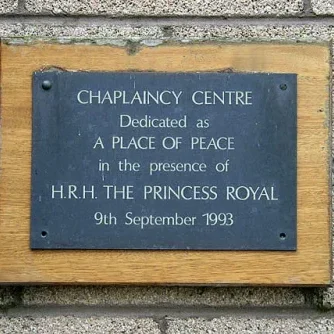
Image: A plaque at the Borders General Hospital, Tweedbank, Melrose, Wikimedia Commons Licence