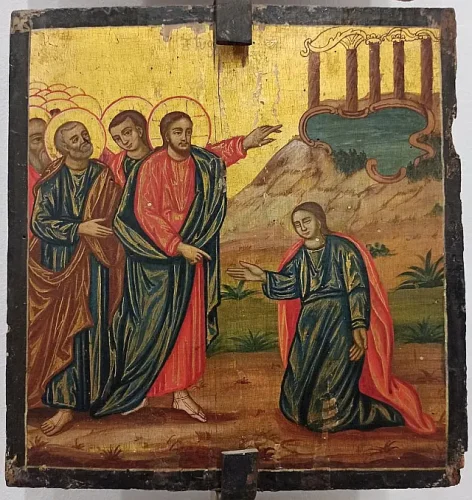
The healings of Jesus, the human person, and the ministry of the Church
by Tom Magill
Jesus’ Healings and the Human Person
Healing was central to the ministry of Jesus. Most of us could with ease think of a number of his healings of the blind, the deaf, the lame, those without speech. He healed those tormented by demons, those whom today we would see as suffering from mental health conditions. The Lord clearly valued the human body. What he offered was not some philosophical system or abstract spiritual path, still less simply some manifestation of divine power seen in pagan wonder workers such as Apollonius of Tyana. Rather, the Lord’s healings revealed the divine compassion for and solidarity with humanity and the wholeness of being and being-with-others he brought. He understood that illness and disability could bring the afflicted to self-isolate from others or, perhaps more commonly, to be actively isolated by others. His healings at the most basic level were about the re-integration of the human person, restoring wholeness to the individual and renewing their social bonds. Corporeality and materiality mattered to him since they display not some outward, disposable husk but rather the physical haecceity of the whole person. (A favourite term of St John Duns Scotus indicating the “thisness” of the individual, the irreducible determination of a person that makes them this particular person) The Lord encountered humanity not in general or at a theoretical level, but in the individual in their specific, historical, cultural, and personal embodiment. His healings encompassed the whole person, physically, psychologically, socially, and spiritually. They were transformative encounters, creating an openness to and hope in the divine presence met in Jesus. His enjoyment of table-fellowship shows this beautifully. He loved to spend time eating and drinking with others especially those who had been estranged and isolated. During these encounters he enabled his table companions to get in touch with something deep within their corporeality – “Did not our hearts burn within us” the disciples on the road to Emmaus exclaimed after their meal with him. It is no accident that this sharing of bread and wine would become the central act of Christian worship.
Login or subscribe below to continue reading this article
Tom Magill is a Doctor of Philosophy from the University of Glasgow through his study of St Mark's Gospel. He taught Bible Studies in our Scottish seminaries and in Glasgow's Faculty of Divinity. He is a retired priest of the Diocese of Motherwell.
____________________
Image: 'Icon of "Christ Healing the Blind Man", 19th century, village of Brashlyan, Burgas Art Gallery Sienna Wikimedia Commons Licence