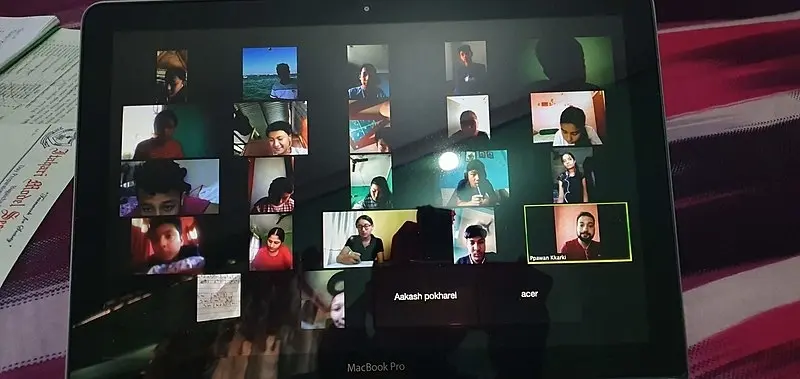
Covid-19 and Schools
by Stephen McKinney
The Covid-19 pandemic created some very pressing challenges in school education. The vast majority of school children were no longer in school, and schools only remained open for small numbers of children of key workers. Children returned to school in Scotland on 10th August, under strict guidance about hygiene and social distancing.
A number of very serious issues affecting children and young people were highlighted during lockdown: an increase in mental health problems; the heightened dangers for children who suffer domestic abuse; the continued effects of digital exclusion; the effects of the absence from school; the move to home education; and a rise in food insecurity. This short article will focus on two issues: absence from school during the lockdowns caused by the pandemic (and continued absence for some children in the transition from lockdown) and food insecurity for children and young people.
Absence from school
Before the pandemic there were 250 million children not attending school throughout the world. The global spread of the pandemic meant that by mid-July 2020, a billion children were out of school in more than 160 countries. An estimated 40 million children were unable to access early childhood education in their pre-school year during the pandemic. Around 40% of developing countries were unable to support learners at risk during the Covid-19 lockdowns.
People across the world lost their source of income (temporarily or on a longer-term basis) as a result of lockdowns, and there has been an increase in the number of those who experience poverty and, in some cases, severe poverty. In these circumstances, there is a greater risk of a high drop-out rate from schools in some parts of the world and a greater probability that more children will not complete primary and lower secondary school education. This is expected to be especially marked in sub-Saharan countries, Haiti, Jordan, Nepal and Pakistan
In Scotland, the easing of lockdown and the transition to the return to school has been very focussed on the curtailment of the virus, the health and safety of children and adults and a creation of a safe learning environment
The initial and provisional figures for school attendance indicate that on 28th August 2020 there were 100,000 children absent from school. This means that the attendance rate was 84.5%, down from 95.8% attendance on 17th August 2020. While there is limited data about the authorised and unauthorised absences in this period, and the attendance figures are expected to stabilise, it is recorded that only 22,821 of these absences were Covid-19 related.
Attendance and absence data are collected every two years and the average for school attendance in 2018-2019 was 93%. A higher level of absence was anticipated by the Scottish Government in the transition back to school, though perhaps not on this scale, and the advice is to engage with parents and carers to discuss their concerns and support attendance. The guidance is that the use of measures to enforce attendance should only be used as a last resort.
Food insecurity
One of the very concerning effects of Covid-19 was the rise in food insecurity for children and young people. Alarmingly high rates of food insecurity around the world, including the UK, in the pre-Covid-19 era were exacerbated by the pandemic.
There are three stages of food insecurity: stage one is mild food insecurity, characterised by worrying about the ability to obtain food Stage two is moderate food insecurity, and this includes compromises on the quality and variety of food, the reduction of portions and skipping meals altogether. This can lead to hunger and malnourishment, as people opt for cheaper processed foods. Stage three is severe food insecurity which means people experience hunger which, over a period of time, can lead to serious malnourishment and malnutrition. There were 795 million people who were undernourished around the world pre-Covid-19. Before Covid-19 the expectation was that this figure would rise to 2 billion by 2050.
In many parts of the world, free school meals are provided to children from households with limited income to ensure they have at least one meal a day. There is a long history of free school meals provided in Scottish schools: initially by charitable bodies, including the Christian Churches, and now by the state. State-funded free school meals in Scotland is a means tested benefit. The Scottish Free School Meals Campaign led by the Child Poverty Action Group (in Scotland) successfully lobbied the Scottish Government to provide free school meals for all children attending primaries one to three in Scottish schools on a universal basis. These free school meals were launched in January 2105.
Glasgow City Council extended the provision of universal free school meals to primary four for all children in Council schools in August 2018. This provision of free school meals for all children in primaries one to three (and primary four in Glasgow) and the provision of means tested free school meals continued during the period of lockdown with meals in school, vouchers or cash to buy meals. Means tested free school meals extended into the summer holidays.
The impact of the pandemic on family incomes across the country precipitated a sharp rise in the number of children receiving free school meals. The figure rose by 53,000 to 175,000, a rise of 30.29%. This will be compounded by another expected rise in the uptake of food parcels from food banks. The Trussell Trust had announced an 18% increase in the use of their foodbanks in the UK in the period 1st April 2029 to 31st March 2020, and expect this to be even higher for the next reporting period as a result of the effects of the lockdown. The Trust distributed 1.9 million three-day emergency food parcels (720, 504 for children) in this last reporting period. Scotland was the second highest area in the UK for accessing three-day emergency food parcels.
The pandemic has had a dramatic impact on many aspects of everyday life in Scotland. It has had a serious effect on those children who were already the most vulnerable. Problems of child mental health, child abuse, digital exclusion and food insecurity all pre-existed Covid-19 and have been exacerbated by the effects of the pandemic. The most vulnerable children and young people have become more vulnerable, and many more children have become vulnerable.
McKinney, S.J. (2020) Covid-19: food insecurity, digital exclusion and Catholic schools. Journal of Religious Education. Open Access: https://www.springer.com/ journal/40839
McKinney, S.J., Hall, S. and Lowden, K. (2020) Poverty and Education in Scotland: Reality and Response. In: Thompson, I. and Ivinson, G. (eds) Poverty in Education Across the UK. A Comparative Analysis of Policy and Place. Bristol: Policy Press. pp. 65-88.
A full list of references is available on request.
[/swpm_protected]