Issue 327
Mass for a departed pope
by Paul Matheson
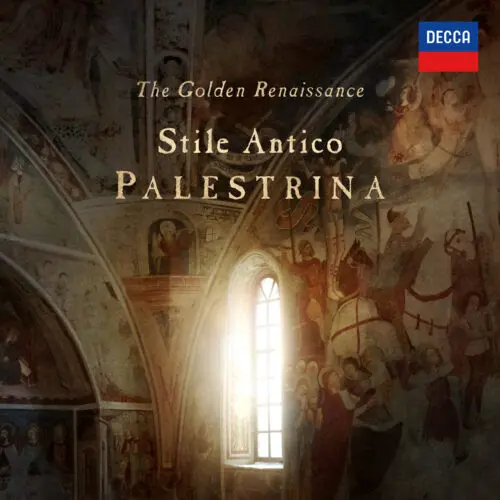
‘The Golden Renaissance: Palestrina’ by Stile Antico (Decca, 4870791)
The much-garlanded vocal ensemble Stile Antico is a consort of 12 singers who sing without a director, usually performing in a circle. Their 2025 release celebrates the 500th anniversary of Giovanni Pierluigi da Palestrina. Born c1525, the Italian composer is considered one of the leading musicians of the late 16th century, with long-lasting influence on the development of church and secular music in Europe. Stile Antico’s album is based around Palestrina’s famous Missa Papae Marcelli (Mass for Pope Marcellus), the mass-setting in which Palestrina used a new, clearer style of polyphony and in doing so saved church music from being severely curtailed or banned by the Roman Catholic Church.
In the booklet notes that accompany the CD, Stile Antico’s tenor Andrew Griffiths explains how Palestrina’s Mass for Pope Marcellus acquired its towering reputation as one of the most consequential musical compositions of the Renaissance.
The long-running Council of Trent (1545-1563) had sought to overhaul the practices of the Roman Catholic church in response to the challenge posed by the Protestant Reformation. When the Council finally reached the subject of liturgical music in 1562, delegates raised two main areas of concern. Firstly, that Masses were sometimes composed with music based on secular melodies or songs whose original words carried associations deemed inappropriate for sacred worship. Secondly, elaborate polyphony and the use of complex compositional techniques tended to make the words of the mass inaudible to listeners.
Although the Council chose to rule only on the first point, the spiritual zeitgeist was clear: the Catholic Reformation demanded a less abstract, more text-focused church music. Exactly how the Pope Marcellus Mass acquired its pivotal role in all of this is still not entirely clear. Marcellus reigned as Pope for only 22 days before his untimely death in 1555. Scholars believe that the Pope Marcellus Mass was composed in 1562, when it was copied into a manuscript at the Basilica of Santa Maria Maggiore in Rome. That date is tantalisingly close to the date of the Council of Trent’s examination of liturgical music. Which begs the question: why was this groundbreaking Mass composed in memory of a Pope who had died seven years earlier?
Login or subscribe below to continue reading this article
Paul Matheson is a policy advisor in equality, human rights and ethical standards in public life. He has a degree in Celtic Studies and a Postgraduate Diploma in Hindi. He has written music reviews for many years.