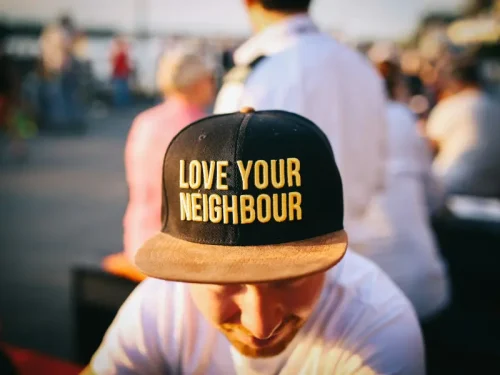
A shared humanity
by Isabel Smyth
The unrest and rioting which followed the stabbing of three young girls in Southport at the end of July demonstrated the worst and best of human nature. One shop owner watched as his business was looted and almost destroyed by anti-immigrant rioters. He saw them hurl bricks at the windows, set a bin alight near the shop’s entrance and empty shelves of cigarettes and alcohol. He thought he had lost his livelihood. But the following morning Mr Balasuriya found a crowd of neighbours, some of whom he’d never spoken to, making repairs and clearing up broken glass. Support flooded in. The owner of a nearby beauty salon set up a crowdfunding campaign and raised more than £11,000 towards repairs. A local builder replaced his windows for free. One of his suppliers turned up with a cabinet of ice cream. A few days later he re-opened the shop.
The stabbings of the children rocked the nation and a report on social media suggested wrongly that the perpetrator was a Muslim and recent immigrant. Right wing groups responded and took to the streets, targeting mosques, refugee and asylum centres and denouncing immigration. The riots seem to spread like wildfire. Some people interviewed on the news suggested it had all happened because people were dissatisfied with the state of the nation; but with or without dissatisfaction it was encouraged and orchestrated by right wing thugs with no concern for the grief of the family of the young girls who had been murdered. It was the kind of situation that can lead us to despair of the human race.
But as can happen in these kinds of situations, the good in people also comes out. The story of Mr Balasuriya is not the only heartening one. At one mosque which had been a focus for demonstrations, the imam and members of the mosque committee waited until things had quietened down a bit before taking out and sharing food with the rioters, even inviting them into the mosque. And there have been many counterdemonstrations supporting refugees and immigrants, decrying racism as well as statements from religious and community leaders stressing their commitment to social cohesion and harmony. I wonder if Michael Gove, the former Home Secretary, now doubts his wisdom in failing to give funding to the UK Interfaith Network which was so committed to good interfaith relations.
Login or subscribe below to continue reading this article
Isabel Smyth is a Sister of Notre Dame who has been an interfaith practitioner for many years. You can follow her reflections on interfaithjourneys.net
Image by Nina Strehl on Unsplash.