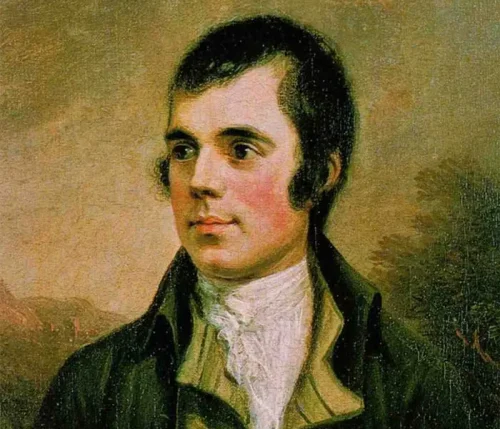
Robert Burns: a Protestant poet?
by Gerard Carruthers
Robert Burns, in various ways, has often been claimed as a Protestant poet.
There are good reasons for this, in that he was an active Moderate Presbyterian who believed in the Patronage Act of 1712, where taxable landowners rather than members of a parish congregation would choose their minister. This was part of the poet’s identity as a Moderate: not in favour of church democracy for the less enlightened but at the same time more liberal theologically than members of the Popular Party which opposed Patronage. Burns genuinely celebrated the straightforward simplicity of Presbyterian piety in ‘The Cotter’s Saturday Night’ (1786) and after the French Revolution transformed his outlook to acclaim the antecedents of the Popular Party, the seventeenth-century Covenanters as upholders of freedom and conscience in ‘The Solemn League and Covenant’ (1795). In afterlife, Burns has been co-opted within Burns club associational culture and annual Burns night celebration which, in their quasi-Masonic liturgical undertones, again owe a general debt to the culture of Scottish Protestantism.
Login or subscribe below to continue reading this article
Gerard Carruthers is Francis Hutcheson Professor of Scottish Literature at the University of Glasgow and is pursuing the issues he discusses here in a monograph in progress: Robert Burns: Patronage, Fraternity & the People.